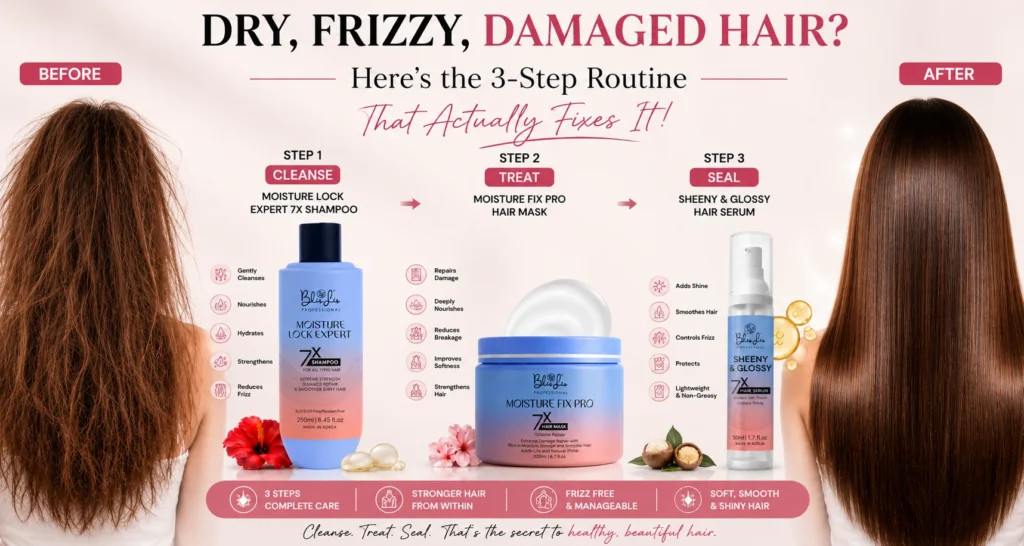
Dry, Frizzy, Damaged Hair? Here's the 3-Step Routine That Actually Fixes It
If you’ve ever stood in front of the mirror pulling at flyaways that just won’t lie flat, or run your fingers through hair that feels more like straw than silk, you already know how frustrating dry and damaged hair can be. It’s one of the most common complaints hairstylists hear — and honestly, most people are making the same mistake: they’re treating the symptom (frizz) instead of the cause (a damaged hair cuticle).
The good news? Once you understand why your hair is behaving this way, fixing it becomes a lot less confusing. In this guide, I’ll walk you through what’s actually happening to your strands, how to spot the early warning signs, and a simple three-step routine that dermatologists and hairstylists have relied on for years to bring hair back to life.
Why Does Hair Turn Dry and Frizzy in the First Place?
Before we get to the fix, it helps to know the “why.” Hair doesn’t become brittle overnight — it’s usually the result of small, repeated stresses that add up.
Moisture loss is the root of it all. Your hair shaft has a protective outer layer called the cuticle, made up of overlapping scales — think of it like roof shingles. When those scales lie flat, light reflects off them and hair looks shiny and smooth. When they’re lifted or roughened, moisture escapes, light scatters instead of reflecting, and you get that dull, rough, frizzy look.
A few everyday habits speed this process along:
- Heat styling. Straighteners, curling wands, and blow dryers used on high heat can push the internal temperature of your hair strand well past what the protein structure can comfortably handle, weakening it over time.
- Chemical processing. Coloring, bleaching, keratin treatments, and rebonding all involve breaking down the hair’s protein bonds to reshape or lighten it. Effective, yes — but also taxing on the cuticle if not followed up with proper aftercare.
- Environmental exposure. UV rays and pollution particles settle on the hair shaft and gradually oxidise the proteins on the surface, which is part of why hair often feels rougher in summer.
- Overwashing (or the wrong water). Washing every single day strips away the scalp’s natural sebum — the oil that’s supposed to keep strands lubricated. Hard water makes this worse, since mineral deposits like calcium and magnesium can coat the hair and block moisture from getting in.
None of this means your hair is “ruined.” It just means it needs a routine that actually addresses moisture and protection — not just a shampoo that promises everything on the bottle.
How Do You Know If Your Hair Needs Repair?
Some damage is obvious, some creeps up on you. Here’s what to watch for:
- Hair feels rough or straw-like even right after washing
- Split ends that reappear a few weeks after a trim
- Persistent frizz, especially in humidity
- Dullness — hair doesn’t reflect light the way it used to
- Tangling that takes forever to comb through
- Breakage when you run your fingers through it, or extra strands in your brush
If two or three of these sound familiar, your hair isn’t asking for a new “miracle product” — it’s asking for a proper routine.
The Real Reason Shampoo Alone Never Works
This is where most people go wrong. Shampoo is designed to cleanse — that’s its job, and it’s genuinely good at it. But cleansing alone can’t rebuild a weakened cuticle or replace moisture that’s already been lost. Expecting one bottle to clean, repair, and protect is like expecting a single skincare product to cleanse, treat acne, and moisturise all at once. It’s just not built for that.
Healthy-hair routines — the kind hairstylists actually recommend — follow three distinct stages:
- Cleanse – clear away dirt, oil, and product buildup without stripping the hair
- Nourish – replenish moisture and repair the internal structure
- Protect – seal in that moisture and shield hair from daily stressors
Skip a step, and the other two end up working twice as hard for half the results.
The 3-Step Routine: Blislis Professional 7X Hair Care Series
The Blislis Professional 7X range is built around exactly this cleanse–nourish–protect philosophy, using a shampoo, hair mask, and serum designed to work together rather than as standalone fixes.
Step 1: Blislis Professional 7X Shampoo
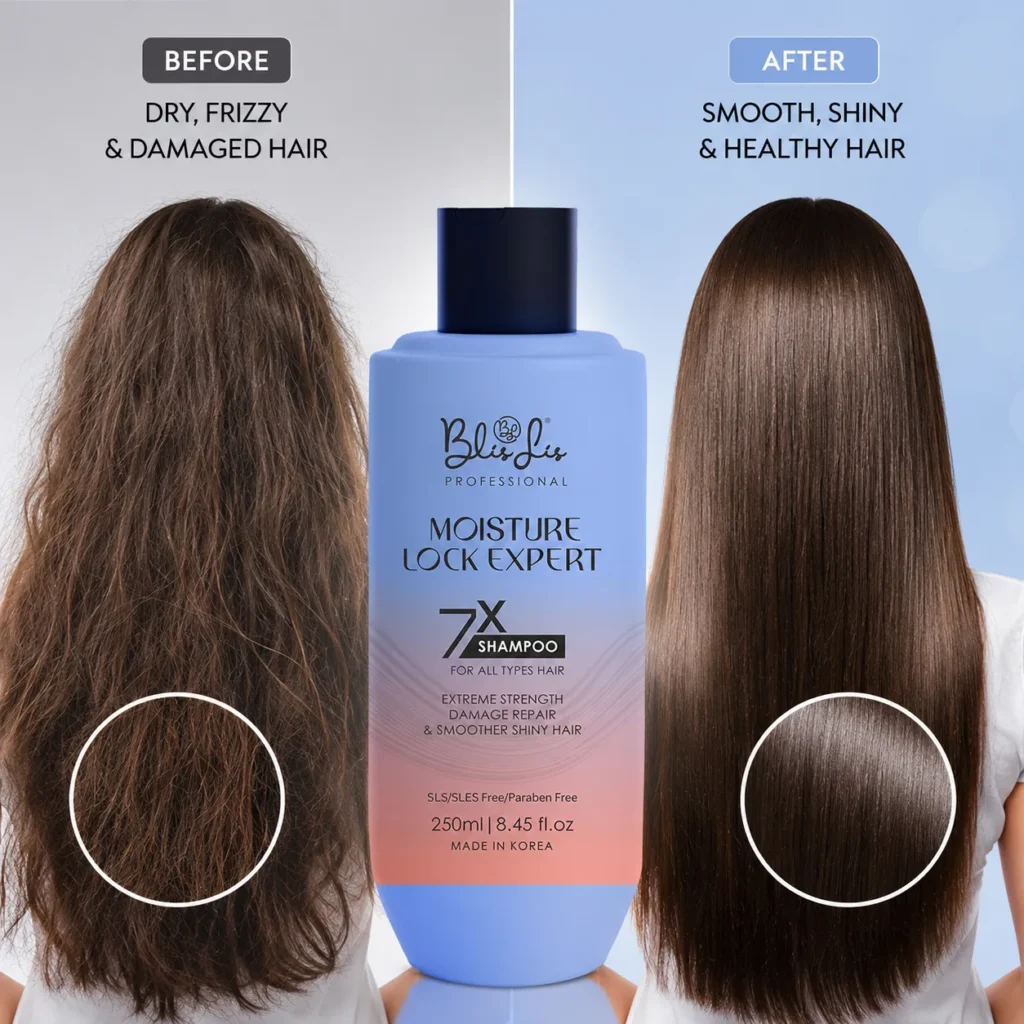
Soak your hair thoroughly first — shampoo for dry & frizzy hair won’t lather properly on dry or half-wet hair. Take 6–10 ml, work it into a lather between your palms first, then massage it into the scalp using your fingertips (not nails) in small circular motions. Let it run down the length of your hair as you rinse, rather than piling more product onto the ends, which tend to be drier and more fragile.
What it actually does for your hair
- Lifts away dirt, oil, and residue from styling products without over-drying the scalp.
- Helps calm frizz right from the first wash, making it an excellent shampoo for dry & frizzy hair.
- Cleanses while maintaining the hair’s natural moisture balance, rather than leaving it squeaky clean and stripped.
- Leaves strands soft enough to detangle without a fight, giving you the feel of a shampoo for smooth & silky hair.
- Preps the cuticle so the mask you apply next can actually penetrate instead of sitting on the surface.
A lot of people underestimate how much this first step matters. If your shampoo strips too much, the mask has to work overtime just to undo that damage before it can even start repairing. Choosing a good shampoo for dry & frizzy hair that also works as a shampoo for smooth & silky hair creates the perfect foundation for the rest of your hair care routine.
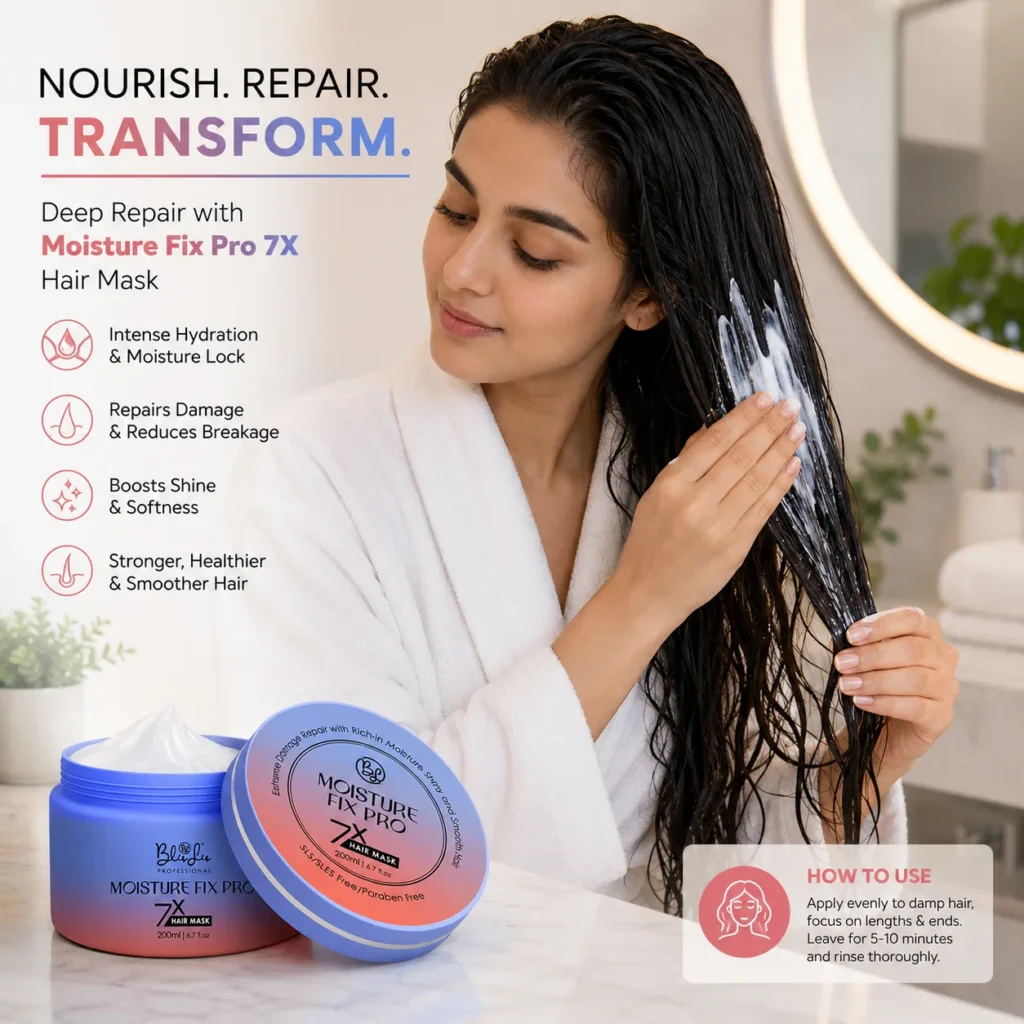
Step 2: Blislis Professional 7X Hair Mask
How to use it
After shampooing, squeeze out excess water — don’t rub with a towel. Apply the hair mask for dry & frizzy hair starting from mid-length down to the ends, since roots rarely need this level of conditioning and can end up looking greasy if you overdo it there. Leave it in for at least 10 minutes (this is non-negotiable — most of the actual repair happens in those minutes, not the moment you apply it). Rinse thoroughly.
What it actually does for your hair
- Delivers deep, intensive moisture that a rinse-out conditioner simply can’t match.
- Smooths the texture, making it an effective hair mask for smooth hair and leaving hair noticeably softer within a wash or two.
- Reduces frizz by helping the cuticle scales lie flatter, making it an ideal hair mask for dry & frizzy hair.
- Strengthens the hair fibre, which shows up over time as fewer split ends.
- Restores shine by giving light a smoother surface to bounce off.
- Makes detangling far easier, especially for curly or wavy textures.
If frizz and dryness are your main concerns, this is the step to never skip — even on days you’re in a rush. Using a hair mask for dry & frizzy hair regularly not only helps control frizz but also works as a hair mask for smooth hair, leaving your strands softer, shinier, and easier to manage with every use.
Step 3: Blislis Professional 7X Hair Serum
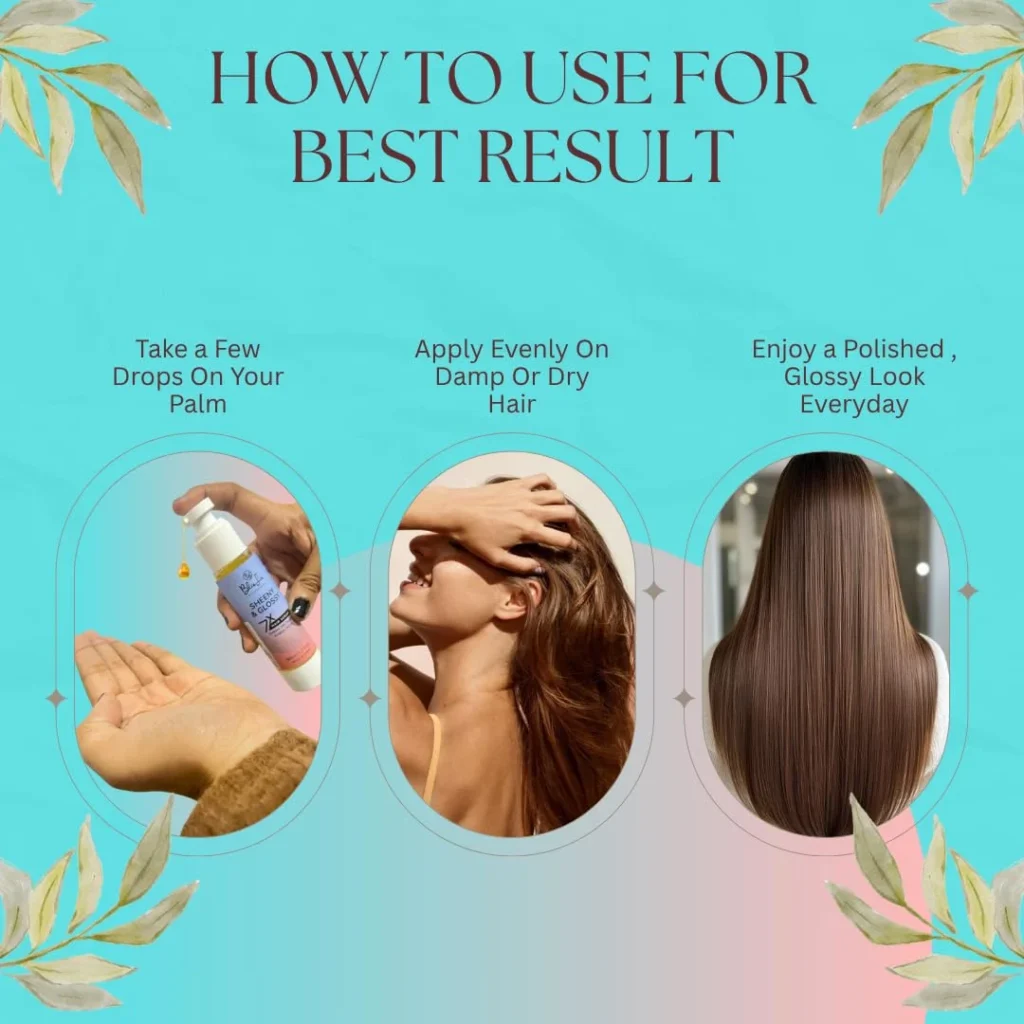
How to use it
Apply the hair serum for smooth & shiny hair on towel-dried or fully dry hair, never soaking wet strands, since serum is meant to seal moisture in, not mix into water. Rub a few drops between your palms and smooth them over the mid-lengths and ends — avoid the roots, or you’ll end up with a greasy scalp by evening. Leave it on; there’s no rinsing required.
What it actually does for your hair
- Gives an almost instant glossy finish.
- Smooths flyaways and rough texture on contact, making it an ideal hair serum for smooth & shiny hair.
- Forms a light protective layer against humidity, sun, and pollution.
- Leaves hair feeling silky rather than weighed down.
- Keeps frizz under control for hours, not just right after application.
Think of the serum as the “sealant” step — everything you nourished in step two, this hair serum for smooth & shiny hair helps lock in place, keeping your hair softer, shinier, and more manageable throughout the day.
Small Habits That Make a Big Difference
Products can only do so much if your daily habits are working against them. A few changes that genuinely move the needle:
- Wash 2–3 times a week, not daily. Your scalp needs time to replenish its natural oils.
- Use lukewarm water, not hot. Hot water opens the cuticle and lets moisture escape faster than it went in.
- Dial back the heat tools. If you must use them, a heat protectant isn’t optional — it’s essential.
- Get regular trims. Split ends don’t heal; they travel up the shaft if left alone.
- Hydrate and eat well. Hair is largely protein (keratin), so a diet low in protein, iron, or omega-3s often shows up as brittle, slow-growing hair.
- Shield hair from the sun. A light scarf or hat on particularly harsh days protects hair the same way sunscreen protects skin.
- Be gentle when drying. Rubbing wet hair with a towel roughs up the cuticle when it’s most vulnerable — pat it dry instead, or use an old cotton t-shirt.
Mistakes That Quietly Undo Your Progress
Even with a good routine, these habits can cancel out your efforts:
- Cranking the flat iron or dryer to the highest heat setting “just to save time”
- Washing hair every single day out of habit
- Skipping the hair mask when you’re short on time (this is the step people cut first — and shouldn’t)
- Piling on too much product, which leads to buildup rather than nourishment
- Brushing wet hair aggressively, when it’s at its weakest and most stretchy
- Ignoring split ends until they travel further up the strand
- Going for chemical treatments back-to-back without any recovery time in between
How Long Before You Actually See a Difference?
Hair repair isn’t instant, and honestly, anyone who promises overnight results is overselling it. What you can expect: with consistent use of a full routine — cleansing, masking, and sealing — most people start noticing softer, shinier, more manageable hair within a few weeks. The real transformation, though, shows up over consistent months of care, not a single good wash day.
Frequently Asked Questions
How often should I wash dry, frizzy hair?
Two to three times a week is the sweet spot for most hair types — enough to keep the scalp clean without stripping away the oils your hair needs.
Can a hair mask really reduce frizz, or is that just marketing?
It genuinely can. Frizz largely comes from a rough, moisture-starved cuticle, and a good deep-conditioning mask smooths that surface back down, which is why hair looks less frizzy almost immediately after use.
Should I apply hair serum on wet or dry hair?
Dry or towel-dried hair works best. Serum is meant to seal in moisture, and it does that job better on hair that’s already at its target hydration level, applied mainly through the mid-lengths and ends.
Can severely damaged hair be completely reversed?
Not entirely — hair that’s already split or broken can’t be “healed” the way skin heals, since hair is non-living tissue once it grows past the scalp. But a consistent routine can dramatically improve how healthy the rest of your hair looks and feels, and prevent further damage from setting in.
Is shampoo alone ever enough?
For very healthy, undamaged hair, maybe. But if you’re dealing with dryness, frizz, or damage, shampoo alone will only get you halfway — you need the nourishment and protection steps too.
How often should I use a hair mask?
One to three times a week is generally ideal. Daily use isn’t necessary and can occasionally weigh hair down, especially for finer hair types.